Using social media for life

It’s almost a month since graduation. I’ve watched the kids walk across the stage, written letters of recommendation to employers and graduate schools, and tried to provide moral support and advice to job hunters while celebrating the relatively large number of recent grads (compared to last year) who are gainfully employed in their field.

The NBA playoffs are over and the Dallas Mavericks won, in a shade of blue very similar to my beloved UK blue—with a Kentucky alum on the coaching staff and another in the communications office.

I went to two funerals in two days—one for a beloved colleague who died too suddenly and too soon, the other for a dear former pastor who was one of the most amazing men of God I’ve ever known.

I’ve also re-landscaped half the back yard, dealt with foundation leveling at our house, continued the archeological dig through the “junk room” we inherited, and kept vigil on a wren’s nest (with 5 babies) directly above the front door, all while trying to get caught up on sleep, swimming, and summer office work. I’m trying to brush up on my Spanish, too, for a second mission trip to Patzun Guatemala. Sometime I’ll act on the paint samples taped to the walls inside and outside the house and start painting.

It’s been a busy month of summer vacation—but I can tell this summer vacation will be too short. I still have a zillion things on my personal “to do” list, a stack of books to read (paper and e-reader), projects to finish, and I try to spend a couple of hours a day monitoring new trends and technologies in social media and communications. The learning and preparation for the next semester never takes a break.

So why am I rambling on like this? Because as much as technology has evolved and made our lives “easier,” we still have to do stuff the old fashioned way. Flower beds needed to be re-built, holes dug, plants watered and mulched. Social media couldn’t do that for me, although it could help me find good deals on plants, tools and supplies, and is helping me figure out what varmint is chewing on my Turk’s Cap plants.

Social media helped spread the word about the two fine people who died, and connected all of us with memorials and funeral arrangements while sharing fond memories.

Foundation repair still involved men digging holes, installing piers and jacking up the house, although social media helped us find recommendations and reviews of potential contractors.

Social media didn’t help me pick out paint colors, and it won’t apply the paint but it did lead me to good instructions for painting over 1960s-vintage wood paneling. And when we found a number of interesting vintage articles in the junk room, social media and the internet helped me find out the history and value of those quirky items.

Social media is making it easier for me to keep up with trends and bookmark source material for my fall classes, which I’ll start planning in August when I return from Guatemala. Social media is also helping me locate donated school supplies to take to Guatemala, and to connect with those group members I don’t know yet. Coffee Break Spanish Podcasts are a big help in refreshing my bad Spanish.

Social media connected me with a local bird expert who reassured me the wrens wouldn’t abandon the nest as long as we minimized our time on the porch.

I could go on and on about how social media is useful in my everyday life. It’s not just for marketers, not just for sharing party pictures, and not just for sharing links to articles I want my students to read. In my life, at least, social media and the internet have become my “go to” sources for the mundane as well as the more exciting aspects of my life.

How are you using social media for your everyday life?

Blogs my students write

It’s no secret I love my students. Well, maybe to them it is, because I do have to use tough love to get some of them to reach their potential.  I hold them to the highest professional standards, and rarely cut them slack on their work. You see, the vast majority of my students are seniors, most in their last semester before launching their careers in the “real world.” I can’t baby them as I prepare to kick them out of the nest.  But I still love them and cry at graduation because I know that’s the last time I’ll see many of them.

At the end of the semester I ask them to write blog posts summarizing what they learned in their classes.  They’re always good, and they provide me valuable feedback I wouldn’t get on a standard student evaluation.  Some of them wax nostalgic, some are inspiring, but all show the students’ newfound maturity as they face graduation. 

Some blogs are particularly memorable, and I wanted to take this opportunity to share two with you.

Alisha Andrews (@alychele on twitter) has been in a bunch of my classes, and I’ve had the pleasure of watching her develop as a writer and strategist through two PR writing classes, an ethics class and a social media class.  Besides her good work, she’s got the most infectious smile, and no matter how bad my day has been, one glimpse at her grin makes the gray clouds part and the sun come out.  So it’s no surprise to me that her blog about Journalism 4460–a required PR Communication class that just about kills me along with the students–hit the nail on the head.  This could easily be the first page of the syllabus next semester.

Reading this blog post took me back a year to another post by former student Sarah Minton (@sarahalisa18 on twitter), in which she expounds on how one knows they’re a PR student at UNT. Enjoy! Sarah was in two of my classes–the infamous Journalism 4460 and my ethics class. Sarah was the Outstanding PR student for the 2009/2010 school year, and another student who was a joy to be around. An avid football fan, she’s famous for striking the Heisman Trophy pose as she walked across the stage at graduation last December.

I’m looking forward to following both of these bright young ladies’ careers, and hope they keep blogging–and making us laugh–for many years to come.

Twitter at 3 am (Denver time)

Show over. Looks like I lived to tell about that one—and didn’t embarrass the university or the Mayborn School of Journalism. (I’m not worried about embarrassing myself, but I never want to hurt the client/employer.) Either I did OK or their second hour guest didn’t show up, because what was originally booked as a one hour interview lasted two. But the time flew by, even though it was way past my bedtime.

Admittedly, I’m a little out of practice, but got the hang of it again quickly. How? First of all, I didn’t think about the fact they claim to have a million listeners of this show. I’m on the phone with one guy who’s asking me questions, and occasionally someone else is conferenced in for a three way conversation. That’s a pretty normal state of affairs for most of us, and one PR pros could keep in mind when doing interviews.

So, how did it go? After my prep (see previous blog post), I had several interesting Twitter conversations with my students, mainly about Rebecca Black’s horrible viral music video—then she turns up on Leno and the snarkfest got even better.

Gotta love Twitter. Where else can you converse with people like they’re sitting in the living room with you while they’re miles away? But I digress….

My desired nap never materialized, and at about 1:30 am I found myself fading. I made a cup of strong tea and got a huge glass of ice water, hooked the headset up to my phone, and listened to the show before ours. I pulled out my notes and listened to people talk about DUI and marijuana and how Obama is a Marxist. Seems to be a theme there.

There was a small posse of students listening—and tweeting—that I really appreciated. Katie Grivna, NT Daily Editor (@katiegrivna), Julianne Verdes (@JooLeeV), Lesley Merritt (@PR_Lesley), @ValerieElisse (sorry, can’t remember your last name because I haven’t had you in class yet), Nick Clarke (@Nikwc) and my loyal TA, Kali Flewellen (@iamkalijo) turned out to be a spontaneous support posse. They’d chime in with comments, quips for me to use, and critiqued everything from the show’s music to the announcer’s voice (very nice).

Rick Barber is one of the best informed and considerate radio hosts I’ve worked with. He knew his stuff but had no problem saying “I don’t understand this, explain it to me.” I was way over-prepared (as any good spokesperson would be) but nothing prepares you for those people who call in to radio talk shows.

The first caller was a Star Trekkie, who thought this whole thing was “borg like.” I found things in his comments to agree with, to validate his position, and Rick eventually politely cut him off to go to a commercial break. We also had a call from a Texan who wants to major in music at UNT, who wanted to know how to use Twitter strategically, and a real estate guy who was asking for advice on how to use SM in his business. I found myself dispensing some consulting advice, which is OK. I want people to know how to use it strategically, and find value in it.

I even got to discuss my beloved Kentucky Wildcats and the NCAA basketball tournament. How’s that for taking control of an interview? And I plugged the social media class blog on air, too.

Kali, my awesome TA, called in and had some good things to say about Twitter, and I had the chance to discuss some customer service case studies, how to set up a Twitter account, and how to find people to follow. I plugged Tweetdeck, Hootsuite, and Twellow. Rick seemed to be hanging on every word.

He’s a great interviewer. He lets you talk, asks good questions, and is fun to chat with. I’m spoiled. I felt like I was sitting at a table having a beer with him, it was so easy. Because he’s such a congenial interviewer, I was able to get all my desired talking points in without (I hope) appearing to take charge of the interview.

But those callers can be scary, especially at night—to paraphrase Forrest Gump, “They’re like a box of chocolates, you never really know what you’re going to get.

As for prep– a good spokesperson knows the topic, and is passionate about it.  That’s all it takes to make it look easy, although I was consciously watching the clock to put in a Mayborn plug if I thought it had been too long since the last one.  Gotta think on your feet, but it’s easy to do if you know your stuff and love it.

The kids who tweeted comments and ideas didn’t realize it at the time, but they were doing exactly what they’d be doing for a client or CEO in a similar situation. And they were great moral support. Even though I’ve done stuff like this dozens of times before, it’s always good to know your posse’s got your back.

Click here to listen to the whole show.

Twitter at 2 a.m.? What WAS I thinking?

My PR students may be interested in knowing how I prepped for a one hour live interview on 850 KOA radio in Denver on Wednesday, March 22. People who know me well will want to know how I prepped for this interview because it was from 2-3 a.m. Dallas time. They know I’m usually in bed by 10:30 because I’m an early riser. Oh well, we PR people are good soldiers. We do what we have to do for the cause.

The producer’s call came at 3:30 as I was walking over to the student union to meet a music professor friend for coffee. At this time of year she’s up to her eyeballs in juries and recitals, and I’m up to my eyeballs grading student writing. Thirty minute breaks are necessary for our sanity.

The producer had received a very nice, very flattering dispatch from UNT’s PR department touting me as an “expert” on Twitter, available to talk about it, and describing my use of it in the classroom. This advisory included an incredibly eloquent quote by me, caught when I was well-rested and in a good mood.

The scenario was intriguing: The show is called “After Midnight with Rick Barber” and it has a million listeners. It’s available via webcast, and because it’s a Clear Channel station, they have wide reach. This is a good opportunity to promote the University of North Texas and the Mayborn School of Journalism. But 2 am? That’s deep into my regular REM time.

But Steve, the jovial producer, had me at “This radio host just doesn’t ‘get’ Twitter.” I’m in, big time. I LOVE talking to Twitter haters, Twitter agnostics, Twitter wafflers and Twitter doubters big-time. Sure, I’ll stay up past my bedtime to talk to your guy about something I started out hating and for which I am now an evangelist. Do I call you, or will you call me?

After exchanged emails nailed down all the details, my work began. I’ve done live, one hour interviews before, but they were always in studio, where I could see the host, and at a civilized hour. Wait, there was the one I did on a hunting and fishing show (when I worked for a conservation organization) at 5 am an hour’s drive from home. But I digress….No matter how “expert” you are, you have to prep for something like this, or you’re a fool. I’m representing the university, even if it’s in another time zone when only insomniacs are listening. So the first thing I did was research the station, and the host. I ‘liked’ the station on Facebook and started following them on Twitter.

News Radio KOA 850 AM is a news/talk station that is also the official station of the Denver Broncos. Their broadcast lineup includes Rush Limbaugh, which is important to know, because that tells me a lot about their audience. Their network news is Fox News Radio. Looking at the rest of their lineup, I can tell they like humor. Good, I’m OK with that. I also catch up on local news, which, if appropriate, I can refer to during the interview. Colorado is struggling with major brush fires right now.

The next thing I do is try to find info on Rick Barber, which in this case is not easy. The guy doesn’t have much of an online profile, which is not surprising if he’s not a Twitter fan. The station’s website could provide more biographical info, but I’ve got to work with what I’ve got. A Facebook search tells me he graduated from high school in 1964 (so he’s my brother’s age) and has been a radio host in Denver since 1982. He has undergraduate degrees in journalism and anthropology, which makes me think he’s an interesting guy. He’s from Providence, RI and likes classical music and jazz. I think he likes golf, but he doesn’t really have much on his page. I know all this because his Facebook security settings are wide open.

I listen to their local newscast—pretty standard fare—and the evening talk show host rant about how our president is a Marxist.

So, now that I have an idea of the tone of this station, I check for some updates on Twitter, related to its 5th birthday, and refresh my memory on some general social media statistics. I’m trying to anticipate the questions, and listening to the people calling in to the earlier programs helps me prepare for the potential for late-night nuttiness.

And I have another Diet Coke.

Then I prepare a little bullet point sheet, print off a couple of favorite blog posts about Twitter and social media so I can quote them, and review a PowerPoint I showed in class about Twitter. I also Tweeted my progress to my students and asked them for input, which was wide-ranging.

It always pays to be over-prepared, especially when it’s a situation you’re unfamiliar with. This is not a taped interview of 5-10 minutes in length, this is an open-ended live late-night minefield, and while world peace or a cure for cancer is not at stake, I don’t want to embarrass the university or the Mayborn School of Journalism. So I decide it’s also worth reviewing a blog post I wrote in March, 2009 about prepping for a late night TV appearance. No, this guy’s not Letterman, but he’s been on the air for a long time in a major media market and undoubtedly has a following. I can’t take any chances.

So now, as the evening news is winding down I’m getting comfy and switching gears to get a little brain break before the fun begins. I’m armed with the stats I want to use, and will have both the desktop and laptop computers fired up for real-time Googling and live Tweeting as needed. I’m looking forward to this, and will post an update after I’ve finished the show—and gotten some sleep!

I’m feeling very Egyptian this week

Instead of a new blog post, I’ll just link you to the item I just posted on the Eagle Strategies blog, the blog maintained by my students in Journalism 4210, the strategic social media class I teach at UNT.  I really have been moved by the events in Egypt this week, and pray that the Egyptian people see the freedom and security they–and all people–deserve in this world.

Click here to read the Eagle Strategies blog.

I confess–I like the idea of the iConfession app

I’m kind of getting a kick out of this whole iPhone confession app.  Not about the app itself—as a practicing Catholic, I think it’s a great idea. Most of us have a little wallet card or brochure with a list of bullet points to consider when examining our conscience before confession, and there are plenty of books out there about preparing for the Sacrament of Reconciliation. Making that checklist available electronically on a device that’s almost surgically attached makes sense to someone like me who can never find that little wallet card when it’s time to make nice with God. And the idea of making a list of transgressions on the gadget will replace the need (for me at least) to take a legal pad with a list of sins into the confessional.

What I’m getting a kick out of is the media—and public—reaction to it. A quick Google search of “iconfession” turns up 840 news articles at the moment I’m writing this.  My students have even blogged about it.

Starting with a snarky blog on Time Magazine’s site, the headline (and we all know most people only read the headline and lead these days) gives the impression that you can now phone in your confession.

I have no way of knowing if this is the article that started all the misinformation in the media and the blogosphere, but it does point out two problems with journalism today: Writers who don’t check their facts and writers who go for the sensational over facts.

This bnet blog would be offensive if it didn’t betray how ignorant the writer is. That’s another problem with the blogosphere—people who are too lazy or stupid to research a story write out of incompetence or misinformation—deliberate or accidental—and get Tweeted, Facebooked, Digged, Delicioused, Reddited and otherwise given credibility by readers as ignorant as the writer.

After several days of innuendo, misinformation and complete nonsense, the US Conference of Catholic Bishops finally blogged about it, and presented a pretty thorough assessment of the app and the crazy media case study it has become. Read that blog, and be sure to check out the links imbedded in it. It would be a great case study for students to follow.

To me, this whole thing is a perfect example of what happens when people read part of a story and rush to judgment—and writing, and tweeting—before getting all the facts straight. Journalists are taught to be skeptical and check facts multiple times before running with a story. Bloggers with no journalism education or scruples are only interested in massaging their egos and running with sensationalism because they know it will be forwarded and read by people who should know better.

As for me, if I had an iPhone, I’d have downloaded the app by now. I can never find the little brochure or card that reminds me of what I need to consider before confession, but I’m never far from my Blackberry. Hopefully by the time I upgrade to an Android the Android version of the app will be available.

Social Media: bringing people together in times of crisis

During this spell of icy weather (is it Winter Break II or Early Spring Break?) I’ve been getting over a horrible upper respiratory infection, which gave me the perfect excuse to wallow on the couch with blankets, cats and a laptop, monitoring the cable news channels and social media.  Just the way any modern AARP member spends her time off, right?
Between naps and doses of Mucinex, I noticed something.  There have been many articles written about how social media supposedly isolates us.  One of my students, Pelpina Trip, blogged about a new book by Sherry Turkle called “Alone Together” and went on to quote an interesting Pew Research study about social media. 
I’m with Pelpina, and Pew, on this topic.  Yes, it’s annoying to be around people glued to their laptops, tablets and mobile devices to the exclusion of the people around them.  I’m getting a lower tolerance for rudeness even as I tweet and text from restaurant tables while conversing with my husband or friends. 
But I think overall, social media can be a great unifier.  While lounging on the couch waiting for the world to thaw out I’ve experienced and commented on the uprising in Egypt, heard people complain about the rolling blackouts that left them freezing in the dark, exchanged energy conservation tips,  learned which restaurants and stores were open in Denton, shared snarky comments about the Super Bowl and helped students with assignments.  I’ve rearranged guest speakers for my class, given shout outs to colleagues who are doing heroic work in the bad weather, and whined with friends all around the country as we deal with this horrible winter storm. 
My first year out of college I went through a blizzard in Indianapolis.  It was the winter of 1978, and I was among a team of about 30 people that kept Channel 13 in Indy on the air for 4 days. We suspended union work rules so that every task was covered, slept in shifts in the hotel across the street or in sleeping bags in offices (the mayor of Indy spent one night on a couch in our lobby), and we pulled together as a team to keep the information flowing to a city paralyzed under 3 feet of snow and near-zero temperatures.  There was no internet, no Twitter, no social media of any kind.  We had land lines and “film at 11.” It was primitive by today’s standards—no live shots of reporters freezing on highway overpasses and stating the obvious, just good solid information sharing to keep people alive and comfortable.  People around town phoned the station to tell us what was going on, what stores were open, who needed help, which stores had gasoline or milk or baby formula, and we passed it on to the viewers.  The National Guard put snow plows on tanks.  I couldn’t find my car for 3 days and it took a week to dig it out, and then it had to be towed to the shop for repairs.  That’s life in the rustbelt.
Why am I telling you this?  Because what we did at WTHR in Indy was exactly what social media has done during this storm and its aftermath—we shared useful information with people who needed it, and we were occasionally entertaining.  And people like me, sniffling and lying on the couch, felt connected to the world by the touch of communications.  Social media is an extension of that—it’s more personal than an exhausted anchor in a newsroom passing along information, and it doesn’t require the filter of an assignments editor.  You can converse with multiple people at once and share diverse points of view, without editing by a media gatekeeper.  It’s info from a friend—real or electronic—and it makes you feel connected and whole.  That’s what the global village is all about.

The overwhelming responsibilities of teaching social media

I’m finding myself a little overwhelmed these days. Like my students, friends and colleagues, life is suddenly overwhelming. There are simply not enough hours in the day or days in the week to get everything done. If I didn’t have a husband who knows his way around the kitchen and laundry room without a map, I’d be starving and look like a homeless person. Teaching three writing classes and one graduate PR class is too much for one mortal, but somehow I’m doing it, although I’m constantly terrified I’m not serving my students well. And then there are the faculty committees, and the few outside activities I allow time for. The house isn’t as clean as I’d like it to be, but it’s livable. The dog and cats still recognize me, and that’s good.

But what do we really need to do? I just spent two hours on Tweet chats with online friends, students and strangers from all over the world. I got some good ideas, but is my life changed by these information exchanges? Probably not. But it’s one of those things I “have” to do. And who makes me feel like I have to do it? I do. It’s self-inflicted overachievement torture.

I’m also feeling overwhelmed because I’m trying to absorb every detail about social media that I can find before classes start in January. You see, I’ve been asked by the faculty to teach a much-needed social media class at UNT. It’s much needed because PR and advertising students are expected to know social media applications and strategies before they graduate. But at the beginning of this semester, a large proportion of my students didn’t have a Twitter account, weren’t blogging, and still don’t know about Digg, Delicious, and Google Analytics. They start internships and come to me in a panic because their supervisors expect them to take over social media for the clients. They’re overwhelmed, too.

There’s simply too much information out there for one person to know and disseminate to eager young minds. So that’s why I’ll be crowdsourcing many aspects of the social media class next semester.

Why should that class be based on one person’s point of view? You can’t tell me there’s one human being anywhere who knows everything about social media and its strategic uses. The topic is a moving target, changing and evolving like rapidly mutating cellular material. I expect my students will be contributing as much to the class as I am, along with my expert guest speakers. 

Isn’t that the point of social media? To share and disseminate information? To work in communities with the expertise of the best and brightest coming to the forefront?  I look forward to their input, which is why I’ve already set up a Facebook page (Eagle Strategies) and a LinkedIn group. Get them started early. Start the conversation now, so it’s up and running by the first day of class. Bring my professional friends into the conversation.  We all learn from each other.

I’m not feeling as overwhelmed now.  I’ve decided to facilitate the social media class rather than teach it.  Because the learning will come from the doing, and I can’t make them do, only facilitate what they’re doing.

Let me know what you think.

Gifts from Guatemala

I’m decompressing from a week with the Maya people in Patzun, Guatemala. From living in the quiet solitude of a Carmelite convent and visiting gentle people in simple villages, I’ve returned to the sensory overload that is life in these United States. It’s quite an adjustment.

It didn’t help that I returned home to a moldy, soggy mess in the form of two front bedrooms flooded from an outside drainage problem. I just wasn’t ready to deal with moving everything out of those rooms (full of my late father-in-law’s books and junk) to rip up carpet and scrub. But I’ve been able to contain my resentment of this interruption to my plans by putting it in perspective based on where I’ve just been.

Point of reference: I live in a 3,200 square foot house with three bedrooms, three bathrooms, three living areas, a huge kitchen and two dining spaces. There’s a big shady yard, patio and pool. Sure, it’s the old, neglected, 1969 ranch we inherited from Bill’s dad, it’s got foundation problems, the original 1969 wallpaper and carpet, and a vintage kitchen with countertops the color of Post-it notes, but it’s home, and the floor plan is perfect. I’m looking forward to fixing it up, decorating it to our liking, and returning to my old habits of entertaining our diverse group of friends.

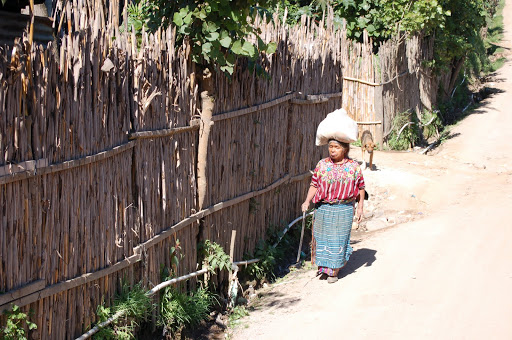
Most of the people I met in Guatemala are poor sharecroppers, making $2-$3 a day. I’m not sure what the women make weaving and embroidering traditional garments, but they all seem to have between 5 and 12 kids, no access to healthcare, and no real opportunity for economic advancement in remote mountain villages devoid of infrastructure or industry.  More than one family could live in my house in Denton, as awful as I think it is, and probably think they’re living the high life.

The really nice houses are concrete block, most likely with a concrete slab floor, and rebar sticking out of the roof in optimistic anticipation of a second floor someday in the future. I’m pretty sure indoor plumbing is rare, and most roofs are corrugated metal. Everybody cooks on a wood stove. I’m told they sleep on mats on the floor, and when it’s cold there’s little or no heat in the homes.  Other homes are made of bamboo or wood (and sometimes cornstalks) stacked kind of like log cabins, with mud chinking betweeen. They undoubtedly have a dirt floor.

My resentment at spending several days cleaning out two rooms I almost never use is a little out of place, considering that the vast majority of the people in the world don’t have extra rooms to stash junk they don’t use but can’t bear to part with.  I’ve seen people living in grass and mud huts in Africa, ramshackle dwellings in India and Thailand, adobe and tin homes in Mexico and Venezuela, and plenty of urban and rural poverty in the United States. But I’ve never experienced poverty at this level. It’s everywhere in Guatemala. Meeting the people, seeing the villages, and experiencing how poor they are is not the same as speeding by on the tour bus, looking on and saying “How awful people have to live that way.” 

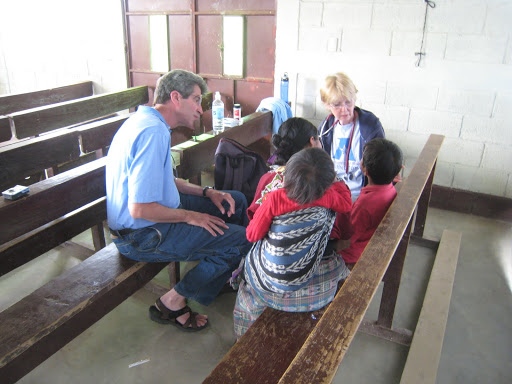
When you see people line up and wait patiently for their turn with the nurse practitioner to discuss their baby’s ear infection, their anxiety and inability to sleep, or their aching joints from long hours in the fields, you can empathize.  But there’s no Walgreens on the corner to buy a bottle of Tylenol, no CVS Minute Clinic to get a prescription for Amoxicillin.  And if there was, what would you pay with?  $2 a day won’t buy many Advil anywhere, especially in a country that does not allow generic drugs because they have no FDA for quality control.
We did the best we could.  Jean, our nurse practitioner, refers to these clinics as “comfort meds.” Our little mobile pharmacy dispensed antibiotics, anti-parasite drugs, and basic diabetes and high blood pressure meds. People with sleep problems received Benadryl. Pregnant women received a “pregnancy pack” consisting of Tums (for calcium), folic acid, multivitamins, and Tylenol for pain.  Children also received vitamins, no matter what their complaint was. And we gave out Advil, Naprosyn and muscle rub to the aching farm workers who lined up near the end of each clinic.

Whenever I counted out something as simple as 30 Advil and prepared a package of muscle rub and gave it to an aching father, with an explanation of how to take it, I was struck by how grateful and gracious the response.  When the baby had a fever and needed medicine, the mother waited patiently while we prepared everything, labeled it in Spanish and with a visual aid, then explained how to properly administer the drug.  The response was always the same–a warm handshake, a gracious “Thank you” and “Veo a Dios en ti” which is “I see God in you.”
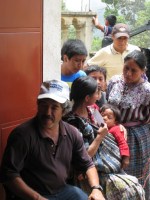
They have no idea that most of us have a stash of painkillers at home and in the office, and often in our purse or backpack. We have family doctors, specialists and extended hours clinics to help us with myriad medical complaints. They have missionaries who periodically appear from a faraway land to provide limited help.  A simple over the counter medicine is a wonderful gift of love and comfort from a stranger who’s come from far away just to make their life a tad more comfortable.  They are so appreciative of things we take for granted.  Are we that appreciative of our gifts?  I never really saw any complaints–these people are poor and have a hard life, but they have tremendous faith in God, love their children and their families, and always have a smile to share. 

Last night, after moving furniture and ripping out wet carpet, I took my glass of wine out to the backyard hot tub to soak my sore muscles.  When do these hard working souls ever get that chance? 

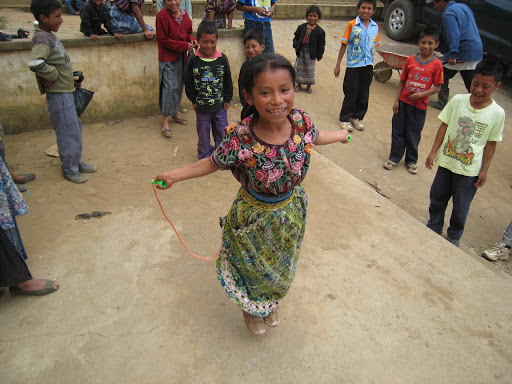
I gave out medicine, toys, candy and smiles in Patzun.  I know the little girl I gave the jump rope to will love and appreciate it for a long time. But she gave me a gift I’ll cherish forever–a new appreciation for the simple things, for a smile and a hug from a friend or a kind stranger.  She, and all the people I met, really helped me appreciate how good I’ve got it–even if I think my life has been really rotten these last couple of years–and how good it can be with just the love of friends and family and faith and trust in God.  All the whiners and haters and complainers in the USA would do well to spend quality time with the people I just spent a week with. Maybe their hard-hearted attitudes will soften toward those less fortunate than themselves, and they’ll be less divisive and mean in their speech and actions.  We can only hope.

The last patient haunts me. We had packed everything up after seeing about 40 patients and administering antiparasite medicine to 250 kids at the school in El Sitio. Our lunch finished, we were seated in the van, ready for the long, rainy drive home, when Miriam, our Mayan interpreter, asked if we could see a baby. No telling how far this mother had walked in the cold rain with this sick baby, but the child had suffered from diarrhea for 15 days. Of course, we unpacked, Jean examined the child, and we dug out rehydration salts and Bactrim suspension from our drug boxes to give to the baby.  But 15 days is a long time for anybody to have diarrhea, and I still wonder about that little baby and whether or not it makes it.

The gifts I received from my brief stay in Guatemala are incalculable and intangible, and much greater than those I gave. As a skilled wordsmith, I’m still seeking the words to describe this experience.  I do intend to return.  Maybe the Holy Spirit will inspire me with the words necessary to describe the change this experience has made in my life. 

For the St. Mark Catholic Church blog on Guatemala, check out http://stmarkguatemala.blogspot.com/

(c) Samra Jones Bufkins, July 3, 2010.